Step 2 Pre-treatment
For a long-lasting and successful implant treatment, good oral health is essential. The following pre-treatments may be necessary to achieve this:
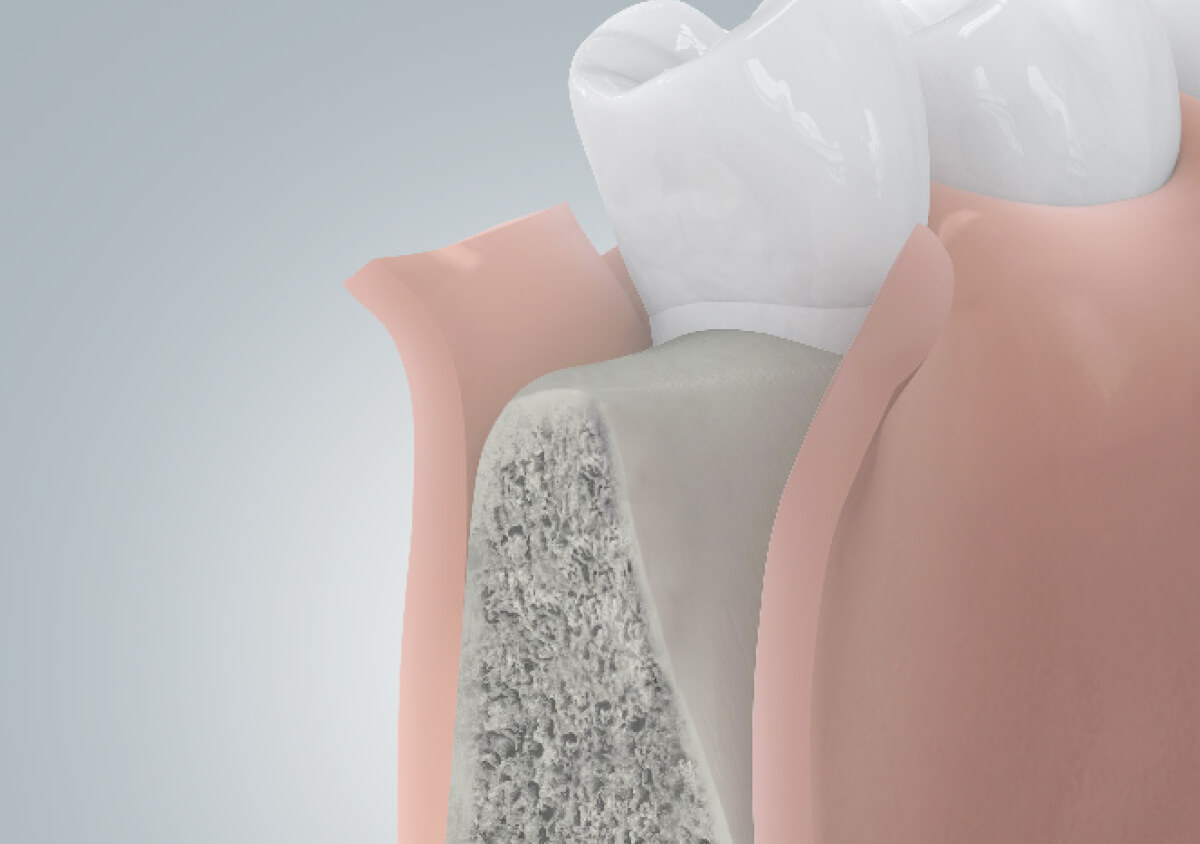
An implant must be placed in a physiologically optimal position to absorb chewing forces and transfer them to the bone. If there is insufficient bone available, your dentist has several options to augment the bone and create a stable foundation.
Example of Bone Augmentation Before Implantation
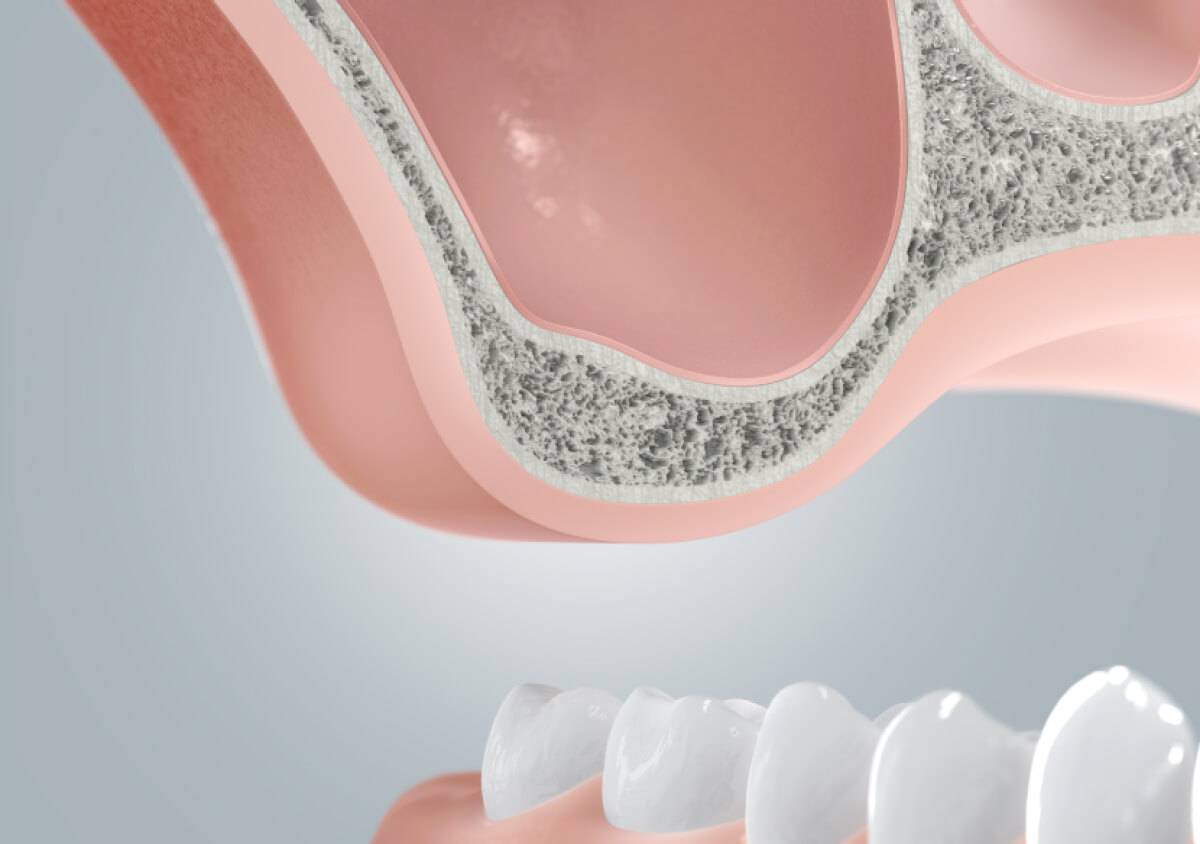
In the area of the maxillary sinus, the bone in the upper jaw often loses significant height. To create a sufficiently stable base for implant placement, the bone can be augmented using special techniques with replacement materials.
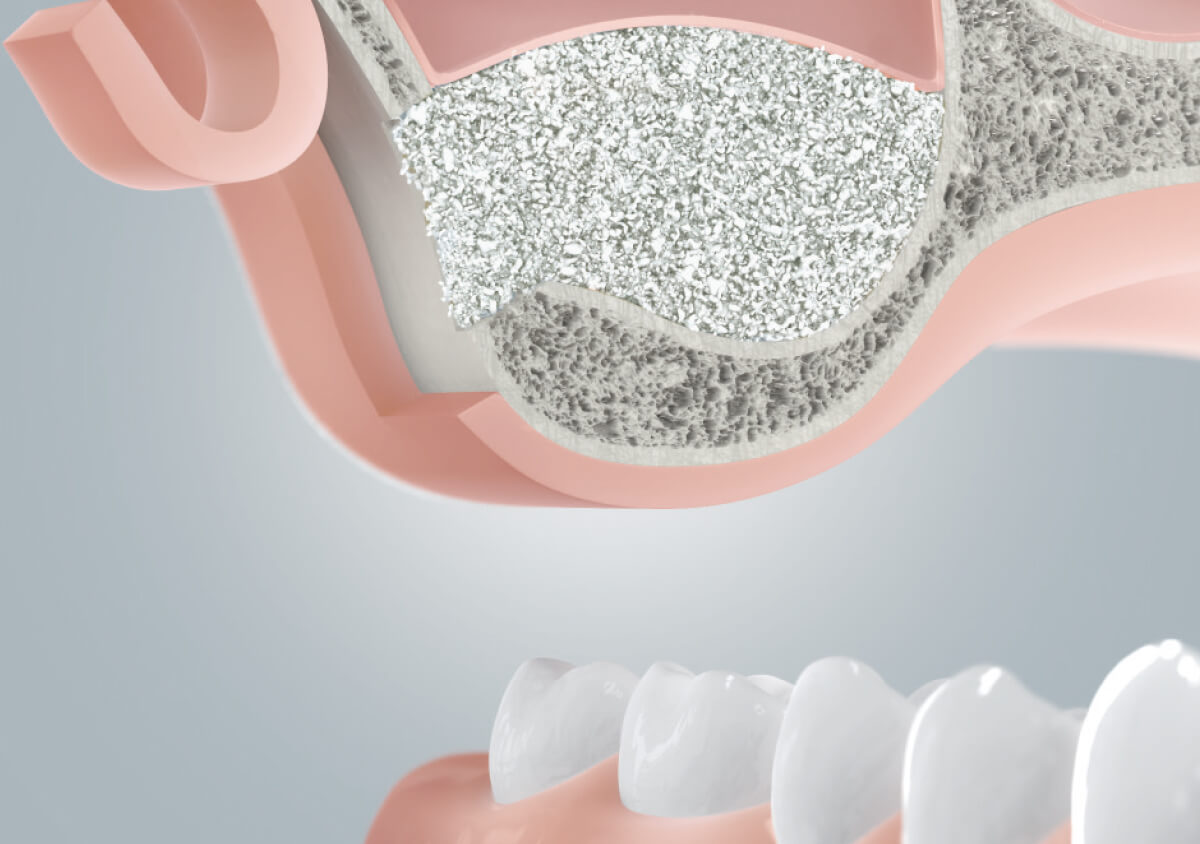
Bone augmentation in the upper jaw: The mucosa of the maxillary sinus is lifted, and the cavity is filled with bone substitute material. This procedure is called sinus floor elevation. After the augmentation, there is sufficient bone available to support an implant.
The bone substitute material is converted into bone through biological processes, providing a foundation for an implant restoration that is stable in the long term.
Whether bone augmentation or soft tissue treatment is needed depends on your individual situation as assessed by your dentist. Bone replacement material is often used when there is significant bone loss or severe gum recession. In collaboration with BioHorizons, Camlog offers not only bone substitute materials but also scientifically validated biomaterials such as the soft tissue matrix NovoMatrix™. This promotes healthy, strong, and aesthetic gum tissue around the teeth or implants.
Example of bone augmentation during implantation:
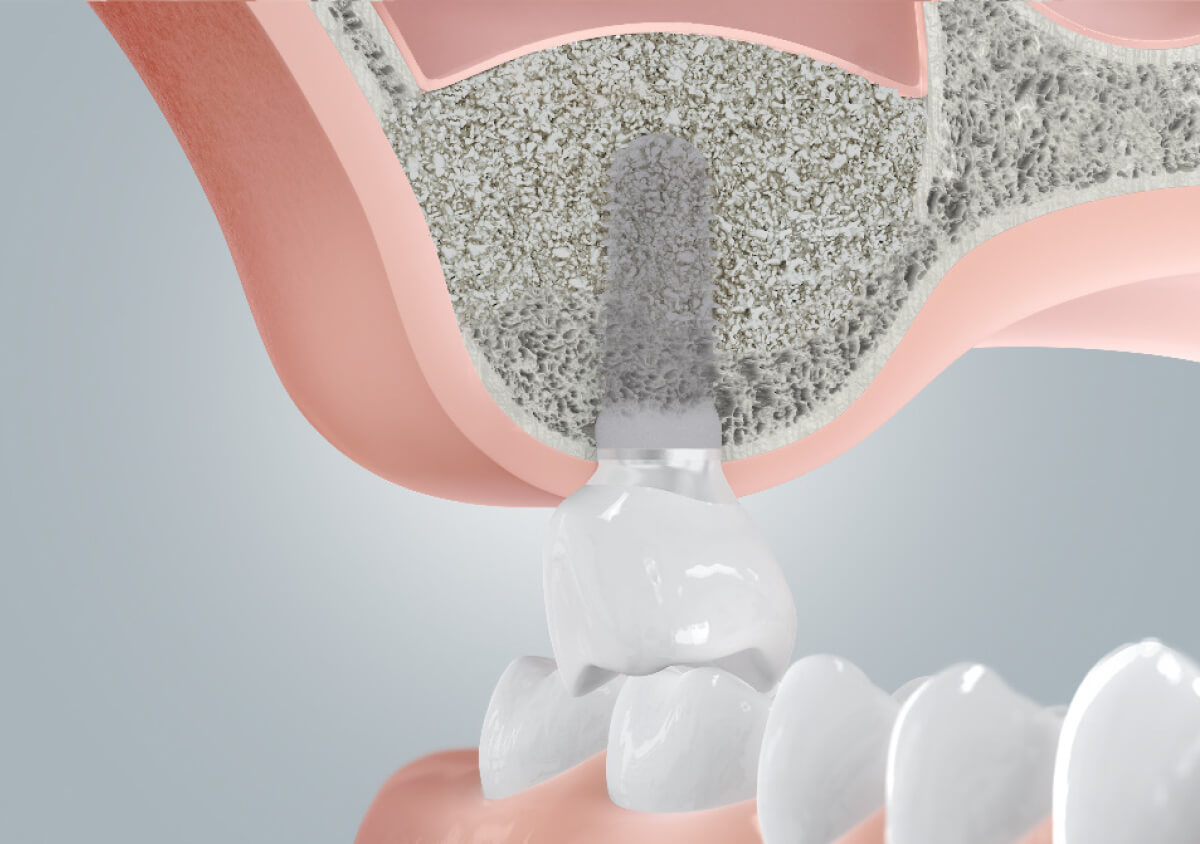
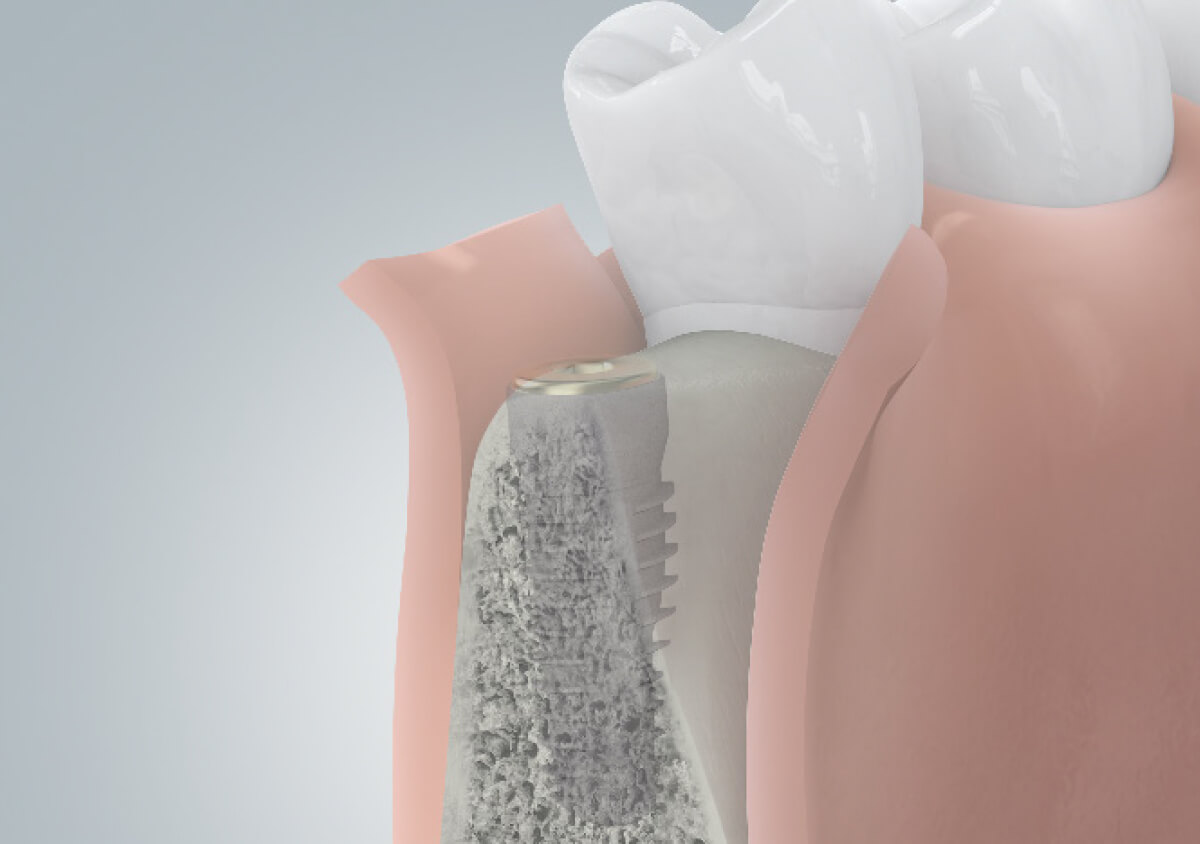
The missing bone volume must be increased in order to anchor the implant stably in the bone.
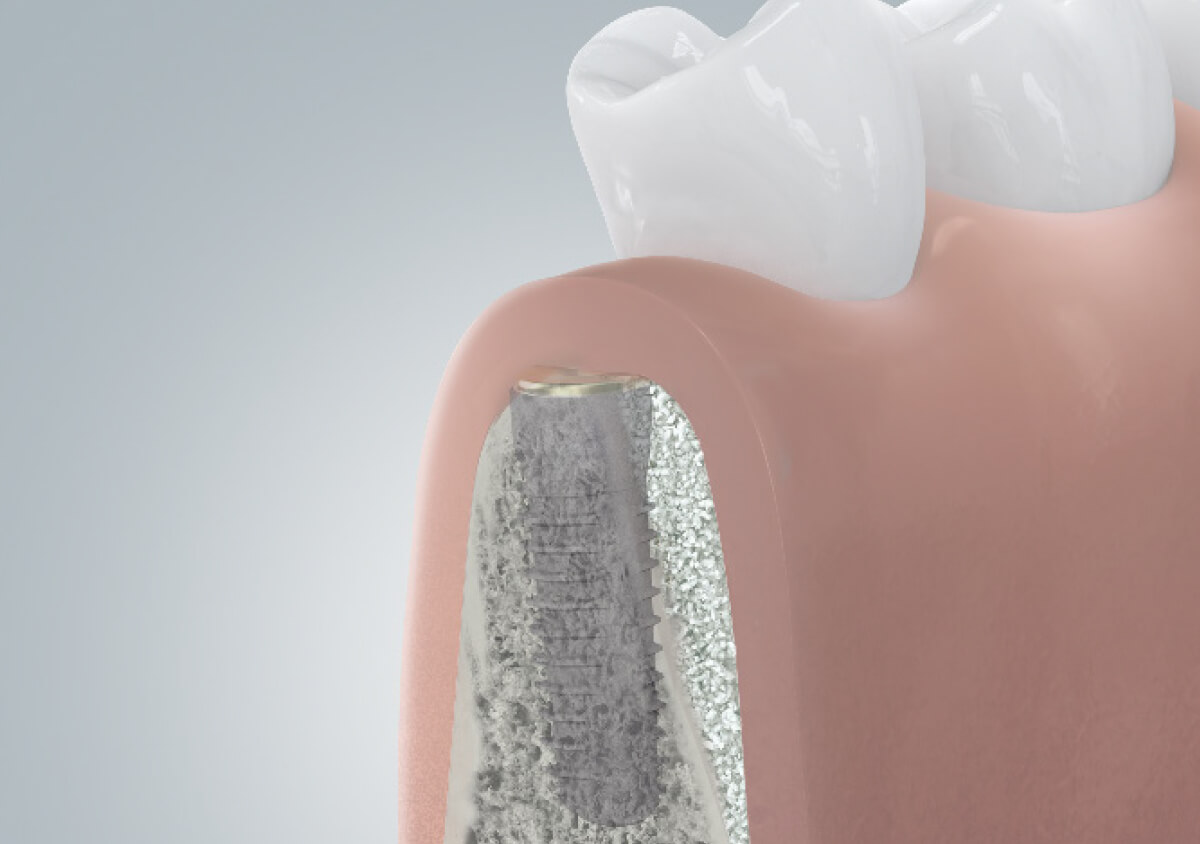
If there is minimal bone loss, the bone augmentation can be performed simultaneously with the implant placement. This saves you from an additional surgical procedure.
The replacement material transforms into stable bone during the healing period of the implant.